Physical Address
304 North Cardinal St.
Dorchester Center, MA 02124
Physical Address
304 North Cardinal St.
Dorchester Center, MA 02124
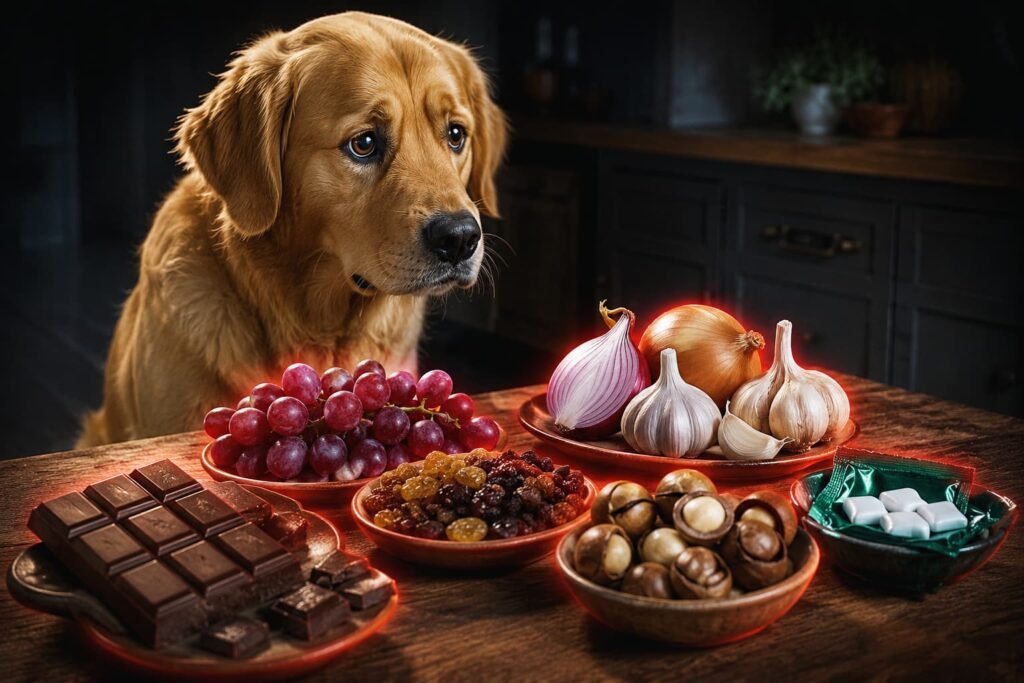
Dogs have a remarkable talent for appearing exactly when food hits the table. One second they’re asleep; the next, they’re staring at you as if they’ve been personally invited to dinner. But sharing our food isn’t always a harmless gesture. Some everyday human foods can be dangerous, and in certain cases, even a relatively small amount may require urgent veterinary attention.
Here are seven foods that dog owners should keep away from their pets.
Chocolate is one of the best-known foods that dogs should avoid. It contains theobromine and caffeine, substances that dogs process much more slowly than humans.
The risk depends on the type of chocolate, the amount eaten, and the dog’s size. Dark chocolate, baking chocolate, and cocoa powder generally contain much higher concentrations of theobromine than milk chocolate.
Possible signs of chocolate toxicity can include vomiting, diarrhea, restlessness, increased thirst, rapid heartbeat, tremors, and, in severe cases, seizures.
If a dog eats chocolate, don’t simply assume that a small piece is harmless. Keep the packaging if possible and contact a veterinarian or animal poison-control service so the risk can be properly assessed.
Grapes and raisins may look like perfectly innocent snacks, but they can cause acute kidney injury in dogs. One of the frustrating aspects of grape and raisin toxicity is that the dangerous amount isn’t reliably predictable for every dog.
Some dogs may become seriously ill after eating a relatively small quantity, while others may show no immediate symptoms. Because of this uncertainty, any known ingestion deserves prompt veterinary advice.
Early symptoms can include vomiting, lethargy, loss of appetite, diarrhea, increased thirst, and changes in urination. Kidney problems can develop afterward.
That makes grapes and raisins particularly deceptive: they don’t look dangerous, and that’s precisely why they deserve attention.
Onions belong to the Allium family, which also includes garlic, leeks, and chives. These foods contain compounds that can damage a dog’s red blood cells and potentially lead to anemia.
Dogs can be exposed to onions in many forms, including raw, cooked, dried, or powdered onion. This means that foods such as sauces, soups, seasonings, and some prepared meals may contain ingredients that aren’t obvious at first glance.
Signs of onion toxicity may include weakness, vomiting, reduced appetite, pale gums, rapid breathing, or unusual tiredness. Some symptoms may take time to appear, so a dog that seems fine immediately after eating onions may not necessarily be in the clear.
Garlic is another member of the Allium family and can also damage red blood cells in dogs.
Concentrated forms, such as garlic powder or supplements containing garlic, can be particularly important to recognize because they may deliver more concentrated amounts than a small piece of fresh garlic.
Possible signs include gastrointestinal upset, weakness, pale gums, lethargy, and changes associated with anemia.
Garlic is sometimes promoted as a natural remedy for pets, but “natural” does not automatically mean “safe.” Dogs have different physiologies from humans, and home remedies should never replace veterinary guidance.
Xylitol is a particularly important ingredient for dog owners to recognize. It is a sugar alcohol used as a sweetener in some sugar-free products, and it can cause a rapid and potentially dangerous drop in blood sugar in dogs. In some cases, it can also cause liver injury.
Xylitol may be found in certain sugar-free gums, candies, baked goods, dental products, and other products. Formulations change, so checking the ingredient label is essential.
Possible symptoms include weakness, staggering, trembling, vomiting, collapse, and seizures. Because the effects can develop rapidly, suspected xylitol ingestion should be treated as an emergency.
Never assume that a product labeled “sugar-free” is safe for your dog. The ingredient list matters.
Macadamia nuts can cause illness in dogs even though they are considered a nutritious food for humans.
The exact mechanism behind their toxicity in dogs isn’t fully understood, but affected dogs may develop weakness, depression, vomiting, tremors, difficulty walking, or an unusual inability to coordinate their movements.
Symptoms can appear within hours of ingestion. Dogs may also become sensitive or uncomfortable when moving.
Macadamia nuts can be especially easy to overlook because they are sometimes hidden inside cookies, cakes, trail mixes, or other foods. That is another reason human snacks should be kept securely away from curious pets.
Alcohol is not safe for dogs. It can be found in obvious drinks such as beer, wine, and spirits, but dogs can also encounter alcohol in less obvious forms, including certain foods or products.
Because dogs are much smaller than humans and have different metabolisms, alcohol can affect them significantly. It can depress the central nervous system and lead to symptoms such as vomiting, weakness, poor coordination, difficulty breathing, low body temperature, tremors, or even coma in severe cases.
A spilled drink may seem insignificant, but pets are often quick to investigate anything interesting on the floor.
The safest approach is to contact a veterinarian promptly if your dog has consumed a potentially toxic food.
Try to determine:
Keep the original packaging whenever possible. It can help a veterinarian determine exactly what your dog was exposed to.
Do not induce vomiting or give your dog home remedies unless a veterinarian or qualified animal poison-control professional specifically instructs you to do so. Some situations require immediate treatment, while others may simply require careful monitoring.
The kitchen is full of foods that are perfectly ordinary for humans but potentially dangerous for dogs. Chocolate, grapes, raisins, onions, garlic, xylitol, macadamia nuts, and alcohol are among the foods that deserve special attention.
The good news is that prevention is usually simple: keep potentially dangerous foods out of your dog’s reach, check ingredient labels, and make sure everyone in the household knows what should never be shared.
Your dog may look at you with the persuasive expression of a four-legged food critic. Resist the performance. Sometimes the most loving treat is the one you don’t give.
Important: This information is for general educational purposes and is not a substitute for veterinary advice. If you believe your dog has consumed a potentially toxic substance, contact your veterinarian or a recognized animal poison-control service as soon as possible.