Physical Address
304 North Cardinal St.
Dorchester Center, MA 02124
Physical Address
304 North Cardinal St.
Dorchester Center, MA 02124
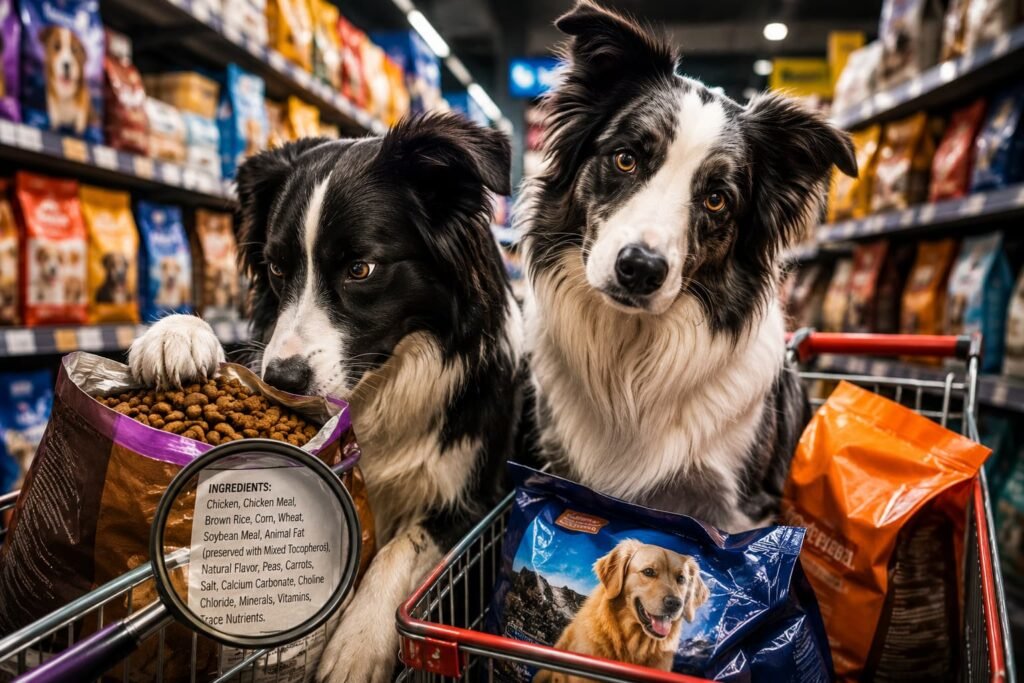
Walk into any pet store and you’ll find shelves packed with colorful bags promising words like “premium,” “natural,” “healthy,” and “complete nutrition.”
But here’s the uncomfortable question:
What’s actually inside the bag?
Choosing dog food can feel like trying to decode a foreign language. Ingredient lists can be long, confusing, and filled with names most pet owners have never heard before. And while not every unfamiliar ingredient is dangerous, some ingredients deserve a closer look—especially when they appear frequently, provide little nutritional value, or may be problematic for certain dogs.
The goal isn’t to panic over one ingredient.
It’s to understand what you’re buying.
Here are 10 ingredients and ingredient categories that dog owners should pay particular attention to when reading a dog food label.
Artificial colors are added to some pet foods to make the product look more appealing to humans.
The funny part?
Your dog couldn’t care less whether dinner is bright red, yellow, or brown.
Dogs choose food primarily through smell and taste, not because their kibble has a fashionable color palette.
Artificial colors generally provide no nutritional benefit. While the safety of individual approved color additives depends on the specific substance and permitted levels, many owners prefer foods that don’t rely on unnecessary artificial coloring.
When comparing similar foods, a product without unnecessary dyes may be the simpler choice.
Dogs don’t need added sugar in their diet.
Small amounts of naturally occurring carbohydrates are not the same thing as feeding a dog sugary treats, but added sugars provide calories without offering much nutritional value.
Ingredients such as sugar, corn syrup, molasses, or other sweetening ingredients may increase palatability.
Regularly feeding calorie-dense foods can contribute to excessive calorie intake and weight gain.
And obesity in dogs isn’t merely a cosmetic issue. Excess body weight can increase the risk of several health problems and affect mobility and quality of life.
Your dog already thinks everything tastes better with enthusiasm. Sugar isn’t necessary.
Sodium is an essential nutrient, and dogs do need some sodium in their diet.
The issue is excessive amounts, particularly when dogs receive additional salty foods and treats on top of their regular diet.
Highly salted human foods such as processed meats, chips, and certain leftovers are generally poor choices for dogs.
When evaluating commercial dog food, the complete nutritional profile matters more than simply seeing the word “salt” on the ingredient list.
Don’t confuse an essential nutrient with an invitation to turn dinner into a snack-bar menu.
Ingredients described with vague terms such as “animal fat” or “meat meal” can sometimes leave consumers wondering exactly what they’re purchasing.
However, this category requires nuance.
Not every “meal” ingredient is poor quality. Properly identified meat meals can be highly concentrated sources of protein and nutrients because much of their water has been removed during processing.
The important issue is transparency and context.
A clearly identified ingredient such as “chicken meal” tells you considerably more than a vague description such as “animal meal.”
When comparing foods, many owners prefer ingredient lists that clearly identify their animal protein sources.
Preservatives are used to keep food stable and prevent spoilage.
Some preservatives are approved for use in pet foods, while others are viewed less favorably by consumers.
Artificial preservatives such as BHA, BHT, and ethoxyquin have attracted scrutiny and discussion over the years.
The presence of a preservative doesn’t automatically mean a food is dangerous. Regulatory agencies establish permitted uses and levels for approved additives.
Nevertheless, if you’re choosing between otherwise comparable products, you may prefer a formula using alternative preservation methods such as mixed tocopherols or other approved natural preservatives.
The important thing is to evaluate the entire formula rather than treating one ingredient as the villain in a nutritional detective story.
Fat is an essential part of a dog’s diet. It provides energy and supplies essential fatty acids.
The concern is not “animal fat” itself.
The question is how clearly the fat source is identified and how it fits into the overall formula.
Specific sources such as “chicken fat” provide more information than a generic description such as “animal fat.”
Clear labeling makes it easier for owners to understand the food and identify potential issues if their dog develops a food sensitivity.
For dogs with known dietary sensitivities, ingredient transparency becomes especially valuable.
The word “filler” is frequently used online, but it can be misleading.
Ingredients such as grains are not automatically fillers. Corn, rice, barley, oats, and other carbohydrates can provide energy, nutrients, fiber, and other useful functions in a properly formulated diet.
The real question is whether the overall food provides complete and balanced nutrition appropriate for the dog’s life stage.
Instead of automatically rejecting a food because it contains grains, look at the complete nutritional profile, ingredient quality, calorie density, and whether the food meets established nutritional standards.
A grain isn’t a villain simply because the internet gave it a dramatic soundtrack.
“By-product” is another term that often gets misunderstood.
Animal by-products can include nutrient-rich organs and tissues that dogs can digest and benefit from. Some by-products are perfectly legitimate ingredients in pet food.
The issue is not that something is called a by-product.
The more important questions are:
A food containing properly regulated animal by-products isn’t automatically inferior to one without them.
In fact, some organ tissues are naturally rich in important nutrients.
Artificial flavors may be used to make food more appealing.
Again, dogs care much more about smell than the marketing language on the package.
A strong artificial flavor isn’t necessarily evidence that a food is dangerous, but it may be unnecessary when a properly formulated diet already contains palatable animal-derived ingredients.
If a dog food depends heavily on added flavoring to encourage consumption, it’s reasonable to ask why.
However, ingredient evaluation should always consider the entire formula and the dog’s individual nutritional needs.
This may be the most important point of all.
An ingredient doesn’t have to be universally “bad” to be a problem for your particular dog.
Some dogs may have food allergies or intolerances involving specific proteins or other ingredients.
Potential signs of a food-related problem can include:
Food allergies are not diagnosed simply by looking at an ingredient list or removing random foods.
If you suspect a food allergy, speak with your veterinarian. A properly supervised elimination diet may be necessary to identify the trigger.
The internet has created some rather dramatic food villains.
Grains are one example.
Corn, wheat, rice, and other grains aren’t inherently toxic to dogs. Many dogs digest them perfectly well, and they can provide useful nutrients.
Similarly, ingredients such as meat meals and animal by-products aren’t automatically low quality.
A nutritious dog food cannot be judged by one ingredient alone.
The complete formulation, nutritional adequacy, ingredient quality, manufacturing standards, calorie density, and suitability for the individual dog all matter.
Instead of searching for one magical ingredient to eliminate, use a broader approach.
Choose a food formulated to meet recognized nutritional standards appropriate for your dog’s life stage.
Look at the ingredients near the beginning of the list and determine which animal proteins are included.
A puppy, senior dog, overweight dog, highly active dog, and dog with a medical condition may require very different nutritional strategies.
Two foods can look similar but contain very different amounts of calories per cup.
Words such as “natural,” “premium,” “holistic,” or “ancestral” can sound impressive, but marketing language isn’t a substitute for nutritional adequacy.
Perhaps the biggest mistake dog owners can make is searching for a perfect ingredient list.
There isn’t one universal recipe that is ideal for every dog.
One dog may thrive on a food containing grains. Another may require a specialized diet because of a medical condition. One dog may tolerate chicken perfectly well, while another may have a confirmed food allergy.
The best food is not necessarily the one with the most fashionable ingredient list.
It’s the one that is nutritionally appropriate, safe, complete and balanced, properly manufactured, and suitable for your individual dog.
When choosing dog food, don’t panic over every unfamiliar word on the label.
Instead, pay attention to unnecessary additives, excessive calories, unclear ingredient descriptions, and whether the overall formula is nutritionally appropriate for your dog.
Ingredients such as artificial colors, added sugars, excessive salt, certain artificial preservatives, vague animal ingredients, and unnecessary flavoring may deserve closer consideration. But other commonly criticized ingredients—such as grains, meat meals, and animal by-products—are not automatically harmful.
In other words, the ingredient list is a clue, not a verdict.
Your dog doesn’t need the prettiest bag on the shelf.
It needs food that actually meets its nutritional needs.
And perhaps that’s the most useful label-reading rule of all: don’t buy the marketing. Read the food.
Important: This article is for general educational purposes and does not replace veterinary advice. Dogs with allergies, chronic digestive problems, kidney disease, pancreatitis, or other medical conditions may require individualized dietary recommendations from a veterinarian or veterinary nutritionist.