Physical Address
304 North Cardinal St.
Dorchester Center, MA 02124
Physical Address
304 North Cardinal St.
Dorchester Center, MA 02124
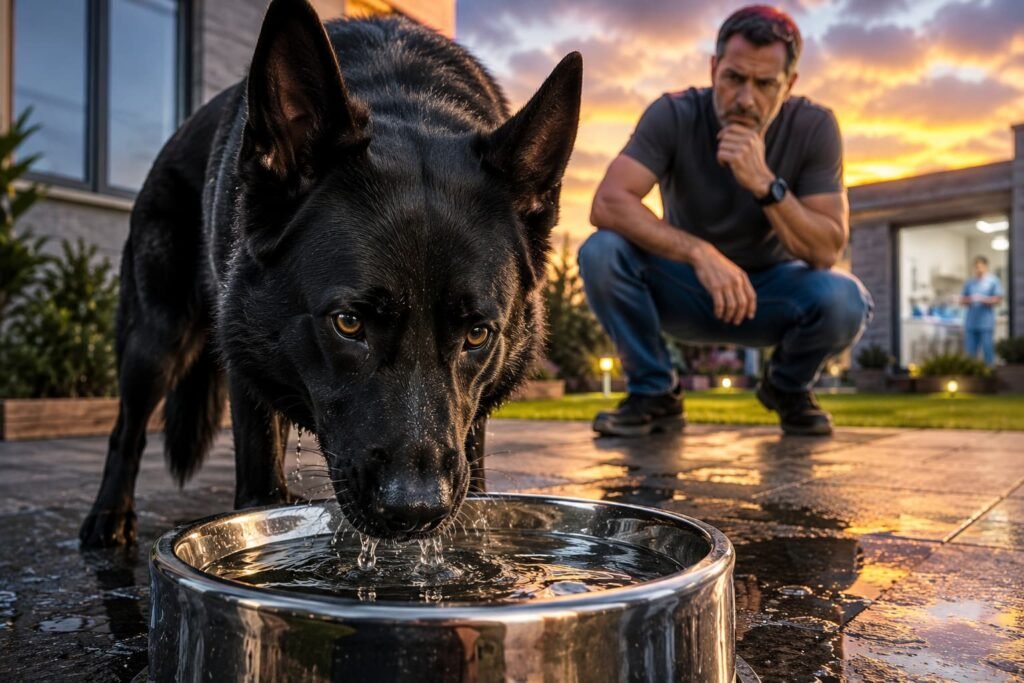
You fill your dog’s water bowl in the morning.
A few hours later, it’s empty.
You refill it.
Empty again.
At first, you might think your dog simply had a particularly thirsty day. Maybe it was hot outside. Maybe they exercised more than usual.
But what if your dog suddenly seems to be drinking water all the time?
Increased thirst can have a completely harmless explanation, but persistent or excessive drinking can also be a sign of an underlying health problem.
The challenge is knowing the difference.
Dogs can’t tell us, “I’ve been unusually thirsty for three days,” so owners have to pay attention to changes in drinking habits, urination, appetite, energy, and body weight.
Here’s what you should know if your dog suddenly starts drinking much more water than usual.
There isn’t one exact amount of water that every dog should drink.
Water requirements can vary depending on:
Dogs eating primarily wet food may drink less from their bowl because they receive more water through their meals.
Dogs eating dry kibble may naturally drink more.
Hot weather and exercise can also temporarily increase thirst.
As a general reference, many healthy dogs drink roughly 20–70 mL of water per kilogram of body weight per day, although individual needs can vary considerably.
What matters most isn’t obsessing over a precise number.
It’s noticing a significant change from your dog’s normal pattern.
The simplest explanation may be the correct one.
Dogs lose water through panting, and hot weather or strenuous exercise can increase their need for fluids.
A dog that spends an hour running outside on a hot summer afternoon may drink considerably more than it does on a quiet winter day.
This temporary increase is generally expected.
However, if your dog continues drinking excessively after returning to normal activity and temperature conditions, it’s worth paying attention.
Heat can explain increased thirst.
It doesn’t explain every case.
Diet can have a major effect on drinking habits.
Dry kibble contains relatively little moisture compared with canned or fresh diets.
As a result, dogs eating dry food may naturally drink more water from their bowl to compensate.
This isn’t necessarily a problem.
If your dog has always eaten dry food and has always had a similar drinking pattern, there may be nothing unusual happening.
The concern is a new or dramatic increase in thirst.
A salty meal or treat can make a dog thirsty.
Human foods such as processed meats, salty snacks, sauces, and certain leftovers may contain considerably more sodium than dogs need.
A temporary increase in thirst after eating something unusually salty may occur.
However, intentionally giving salty foods isn’t a good way to manage hydration.
Dogs need sodium as an essential nutrient, but excessive sodium intake can be harmful.
And if you suspect your dog consumed a large amount of salt or another potentially toxic substance, contact your veterinarian promptly.
Increased drinking isn’t always the original problem.
Sometimes a dog drinks more because it is losing more fluid.
Vomiting, diarrhea, excessive panting, fever, or other conditions can increase fluid loss and stimulate thirst.
In these situations, the increased drinking may be the body’s attempt to compensate.
If your dog has repeated vomiting or diarrhea, appears weak, has dry or sticky gums, or seems severely lethargic, veterinary care may be necessary.
One of the classic combinations veterinarians look for is:
increased thirst + increased urination + increased appetite + weight loss.
Diabetes mellitus can cause this pattern.
When glucose remains abnormally high in the bloodstream, the kidneys excrete more glucose into the urine. Water follows, increasing urine production and potentially leading to increased thirst.
Some dogs with diabetes also lose weight despite eating normally or even appearing hungrier than usual.
If you notice several of these signs together, don’t simply restrict your dog’s water.
Contact your veterinarian.
The kidneys play an essential role in maintaining the body’s water and electrolyte balance.
When kidney function is impaired, dogs may lose the ability to concentrate urine effectively.
As a result, they may urinate more frequently and compensate by drinking more.
Other signs can include:
Kidney disease is more common in older dogs, but it can occur at different ages.
Early veterinary evaluation can be important because treatment and management depend on the underlying cause and severity.
Cushing’s disease, or hyperadrenocorticism, occurs when a dog’s body is exposed to excessive cortisol.
Increased thirst and urination are common signs.
Other possible symptoms include:
Cushing’s disease is more commonly diagnosed in middle-aged and older dogs.
The symptoms can develop gradually, which means owners sometimes assume their dog is simply “getting older.”
But aging isn’t a diagnosis.
Significant changes deserve investigation.
Some urinary conditions can cause changes in urination that owners may interpret as increased thirst.
A dog with a urinary tract infection may urinate more frequently or urgently.
Other signs can include:
A urinary problem doesn’t always cause dramatic thirst, but changes in drinking and urination together are worth discussing with a veterinarian.
The liver plays a major role in metabolism, detoxification, and many other biological processes.
Certain liver disorders can cause increased thirst and urination.
Other possible signs include:
These symptoms can overlap with many other diseases, so diagnosis requires veterinary evaluation.
Some medications can increase thirst and urination.
Corticosteroids, such as prednisone, are a common example.
Certain other medications may also influence water consumption or urine production.
If your dog’s increased drinking began after starting a medication, don’t stop the medication without speaking to your veterinarian.
Instead, tell the veterinarian exactly when the medication started and when the increased thirst appeared.
Sometimes the side effect is expected.
Sometimes it signals that the treatment needs adjustment.
This is extremely important.
If your dog is drinking significantly more than usual, do not simply remove the water bowl to make the drinking stop unless your veterinarian specifically instructs you to do so.
If excessive thirst is being caused by a medical problem, restricting access to water can potentially make dehydration or other complications worse.
Instead, make sure your dog has access to fresh water and contact your veterinarian if the change is persistent or significant.
The water bowl isn’t necessarily the problem.
It may be the clue.
A temporary increase in thirst after exercise or hot weather may be completely normal.
However, contact your veterinarian if you notice:
If your dog is extremely weak, collapses, has difficulty breathing, cannot keep water down, or shows other severe symptoms, seek urgent veterinary care.
If you’re concerned about excessive drinking, measuring water intake can provide useful information for your veterinarian.
For approximately 24 hours:
Don’t force your dog to drink a specific amount.
You’re simply collecting information.
A veterinarian can then interpret the data alongside your dog’s weight, diet, medications, physical examination, and laboratory tests.
If excessive thirst is persistent, the veterinarian may perform a physical examination and recommend diagnostic tests.
Depending on the dog’s symptoms, these may include:
The goal isn’t simply to determine how much water your dog drinks.
The goal is to discover why.
A thirsty dog isn’t necessarily a sick dog.
Hot weather, exercise, dry food, salty treats, and other temporary factors can increase water consumption.
But a sudden or persistent increase in drinking—especially when accompanied by increased urination, weight loss, appetite changes, vomiting, weakness, or other symptoms—shouldn’t be ignored.
Conditions such as diabetes, kidney disease, Cushing’s disease, liver problems, urinary disorders, and medication side effects can all affect thirst.
The most important thing is to recognize a change from your dog’s normal behavior.
Your dog may not be able to tell you what’s wrong.
Sometimes, however, the water bowl is telling you enough.
Important: This article is intended for general educational purposes and does not replace veterinary advice. If your dog is suddenly drinking much more water than usual or develops concerning symptoms, contact your veterinarian for an appropriate evaluation.