Physical Address
304 North Cardinal St.
Dorchester Center, MA 02124
Physical Address
304 North Cardinal St.
Dorchester Center, MA 02124

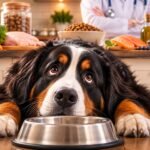
How many times a day should you feed your dog?
It sounds like one of the simplest questions in pet care.
Yet ask five dog owners and you may get five different answers: once a day, twice a day, three times a day, or whenever the dog looks at you with the expression of someone who has been abandoned by civilization.
The truth is that feeding frequency depends on the dog’s age, size, activity level, health, and individual needs.
A growing puppy has very different nutritional demands from an adult dog. A senior dog may need adjustments based on weight, activity, dental health, or medical conditions.
So how often should you actually fill the bowl?
Let’s break it down by life stage.
Puppies are growing rapidly, which means they need a reliable supply of energy and nutrients.
Their stomachs are also relatively small compared with their nutritional needs.
That’s why puppies generally benefit from more frequent meals than adult dogs.
Many puppies in this age range do well with approximately four meals per day, depending on their size, breed, diet, and individual needs.
The goal isn’t simply to give them more food.
It’s to divide their daily nutritional requirement into manageable meals.
For very small or toy-breed puppies, meal frequency can be particularly important because they may be more vulnerable to low blood glucose.
As puppies grow, many can transition to approximately three meals per day.
The daily amount should still be based on the feeding recommendations for the specific puppy food and adjusted according to growth and body condition.
Don’t assume that a rapidly growing puppy should simply receive unlimited food.
Too much energy, particularly in large-breed puppies, can contribute to excessive growth and skeletal problems.
Many puppies can gradually transition to two meals per day during this period.
However, the timing varies by breed and individual development.
Small breeds may mature earlier, while large and giant breeds can continue growing for considerably longer.
Large-breed puppies often require specially formulated diets to support controlled growth and appropriate mineral balance.
For most healthy adult dogs, two meals per day is a practical and common feeding schedule.
For example:
This provides a predictable routine and divides the daily food allowance into manageable portions.
Some healthy adult dogs may do well with one meal per day, while others benefit from three smaller meals.
But for many dogs, twice-daily feeding is a simple starting point.
The important factor isn’t just frequency.
It’s the total daily amount of food.
If your dog needs 500 calories per day, dividing those calories into two meals doesn’t magically turn them into 1,000 calories.
Unfortunately, dogs have never been particularly interested in mathematics.
Dividing food into two meals can offer several advantages.
It can make it easier to distribute the daily calorie allowance.
Some dogs may appear less food-obsessed when their food is divided into multiple meals.
Consistent meal times can help establish a stable daily schedule.
Some medications may need to be given with food, although veterinary instructions should always take priority.
Senior dogs often continue eating two meals per day, but their nutritional needs can change as they age.
Older dogs may become less active, which can reduce their calorie requirements.
At the same time, some senior dogs lose muscle mass or develop medical conditions that require dietary adjustments.
Rather than automatically feeding less because a dog is old, evaluate:
A senior dog that is losing weight unexpectedly may actually need more calories or a medical evaluation.
Age alone doesn’t tell you how much food a dog needs.
Sometimes.
Small and toy breeds have relatively high energy requirements compared with their body size, and very small puppies can be particularly vulnerable to low blood sugar.
Adult small dogs may still do perfectly well on two meals per day, but some individuals benefit from smaller, more frequent meals.
If your small dog becomes weak, shaky, unusually sleepy, or refuses food, contact your veterinarian.
Large and giant breeds have different considerations.
One concern is gastric dilatation-volvulus (GDV), commonly called bloat, a life-threatening emergency involving the stomach.
Risk varies by individual and breed, but preventive strategies often include avoiding one enormous meal, preventing rapid eating, and avoiding strenuous exercise around meals.
Dividing food into multiple meals may be recommended for some large or deep-chested dogs.
Talk to your veterinarian about specific risk-reduction strategies for your breed.
If your dog inhales dinner as though someone is about to confiscate it, slowing down meals can be useful.
Options include:
Eating rapidly can contribute to gulping air and may increase digestive discomfort.
For dogs at risk of bloat, discuss feeding strategies with your veterinarian rather than relying on internet advice alone.
Timing depends on the dog’s activity and the intensity of exercise.
Avoid encouraging intense exercise immediately after a large meal, particularly in dogs at higher risk for gastric problems.
For active or working dogs, feeding schedules may need to be adjusted around exercise.
If your dog participates in strenuous activities, sports, or endurance work, ask your veterinarian about an appropriate feeding and hydration schedule.
Some dogs are naturally food motivated.
Others may beg because they’ve learned that begging works.
But persistent hunger can sometimes indicate a nutritional or medical issue.
If increased appetite occurs alongside:
contact your veterinarian.
Don’t automatically solve excessive hunger by adding more food.
Sometimes the problem is behavioral.
Sometimes it is nutritional.
Sometimes the food bowl is simply the place where a medical clue decided to appear.
Occasionally leaving food behind isn’t necessarily a problem.
Some dogs naturally regulate their intake.
However, a sudden decrease in appetite can be significant.
Pay attention if your dog:
Dental disease, gastrointestinal problems, pain, stress, medication effects, and many other conditions can affect appetite.
If the change persists, contact your veterinarian.
Free-choice feeding works for some individual dogs, but it isn’t ideal for every pet.
Leaving food available continuously can make it difficult to monitor how much a dog is eating.
It can also encourage overeating in food-motivated dogs.
Scheduled meals make it easier to monitor:
For multi-pet households, scheduled feeding can also prevent one animal from quietly eating everyone else’s dinner.
Every home has one.
Usually, they’re furry.
Feeding frequency and portion size are two different questions.
You can feed a dog three times a day and still overfeed them.
Start with the feeding recommendations on the food label, then adjust based on your veterinarian’s advice, body condition, activity level, age, and health.
Treats and additional foods also count toward total daily calories.
A useful habit is to measure meals rather than estimating portions by eye.
A cup is surprisingly elastic when someone is holding it.
8–12 weeks: Often around 4 meals per day.
3–6 months: Often around 3 meals per day.
6–12 months: Often around 2 meals per day, depending on breed and development.
Most healthy adults: 2 meals per day is a practical schedule.
Some dogs may do well with one or three meals depending on their individual needs.
Most seniors: Often 2 meals per day, with adjustments based on weight, activity, appetite, dental health, and medical conditions.
These are general guidelines, not rigid rules.
Some medical conditions can significantly change feeding requirements.
Dogs with diabetes, gastrointestinal disease, kidney disease, pancreatitis, food allergies, or other conditions may need specialized diets or meal schedules.
For these dogs, veterinary instructions should take priority over general feeding advice.
The same applies to pregnant or nursing dogs, working dogs, and dogs taking certain medications.
There isn’t one perfect feeding schedule for every dog.
Puppies generally need more frequent meals because they’re growing. Adult dogs commonly do well with two meals a day. Senior dogs often continue with two meals but may need changes based on their health, activity, weight, and nutritional requirements.
What matters most is consistency, appropriate portions, a nutritionally complete diet, and regular monitoring of your dog’s body condition.
Don’t let the clock be the only thing deciding when your dog eats.
Your dog’s age, body, lifestyle, and health matter too.
And if your dog tells you dinner is late by staring at you with profound disappointment, remember: that’s not a medical emergency.
It’s a dog.
Important: This article is intended for general educational purposes and does not replace veterinary advice. Puppies, seniors, pregnant or nursing dogs, and dogs with medical conditions may have individual nutritional requirements. Consult your veterinarian for personalized feeding recommendations.