Physical Address
304 North Cardinal St.
Dorchester Center, MA 02124
Physical Address
304 North Cardinal St.
Dorchester Center, MA 02124
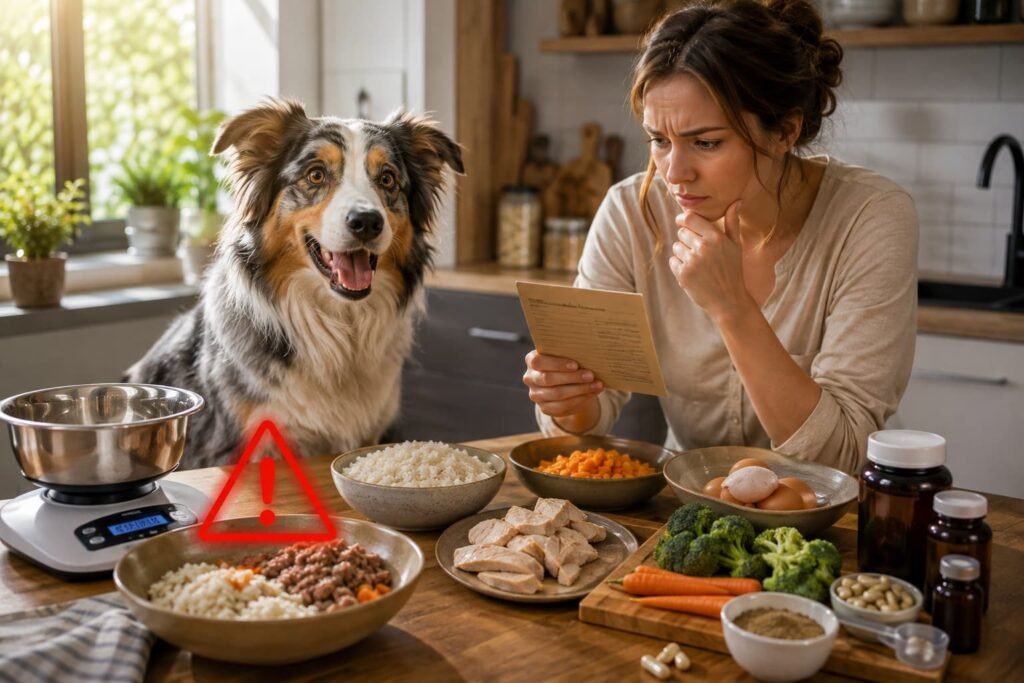
Making homemade food for your dog can feel like the ultimate act of love.
You choose the ingredients. You cook everything yourself. You know exactly what goes into the bowl.
It sounds perfect.
But here’s the uncomfortable truth: homemade doesn’t automatically mean complete, balanced, or healthy.
Dogs need specific amounts of protein, fat, essential fatty acids, vitamins, minerals, and other nutrients. Simply combining meat, rice, vegetables, and a few supplements may produce a meal that looks nutritious while quietly missing nutrients your dog needs.
And that’s where homemade dog food can go wrong.
Here are seven common mistakes that can make a homemade diet unsafe or nutritionally incomplete, along with practical ways to avoid them.
This is probably one of the most common mistakes.
Chicken and rice may be useful as a short-term bland meal in certain circumstances under veterinary guidance, but it is not a complete long-term diet by itself.
Dogs need much more than protein and carbohydrates.
A long-term homemade diet may need carefully calculated amounts of:
A bowl containing chicken, rice, and vegetables can look impressively healthy while still being nutritionally inadequate.
Food can look balanced without actually being balanced.
One of the most important nutritional concerns in homemade dog food is calcium.
Meat contains significant phosphorus but generally doesn’t provide enough calcium to create the appropriate calcium-to-phosphorus balance required for a healthy diet.
A homemade diet that contains lots of meat but insufficient calcium can create nutritional problems over time.
This is particularly concerning for growing puppies because calcium and phosphorus are critical for normal skeletal development.
Simply sprinkling random amounts of calcium powder into food isn’t a reliable solution either.
The correct amount depends on the complete recipe and the dog’s individual nutritional requirements.
If you’re preparing a long-term homemade diet, have the recipe formulated or reviewed by a veterinarian or board-certified veterinary nutritionist.
“Natural” is a lovely word.
It is also not a nutritional guarantee.
A homemade meal can contain fresh meat, vegetables, eggs, grains, and other whole foods and still lack essential nutrients.
Dogs don’t evaluate food based on whether it came from a farmers’ market.
Their bodies require specific nutrients in specific amounts.
This is one of the biggest differences between preparing a tasty meal and formulating a nutritionally complete diet.
If homemade food is going to make up a substantial part of your dog’s diet, nutritional adequacy needs to be calculated—not guessed.
Once owners learn that homemade diets may require supplements, another problem can appear:
supplement overload.
Adding multiple vitamin and mineral products without calculating the entire recipe can cause excessive intake of certain nutrients.
Fat-soluble vitamins such as vitamins A and D are particularly important because excessive amounts can accumulate in the body.
Minerals can also become problematic when supplemented incorrectly.
More isn’t automatically better.
A supplement should fill a calculated nutritional gap, not serve as a nutritional insurance policy thrown into the bowl just in case.
If you’re using a homemade-diet supplement, follow the formulation and dosing instructions carefully and consider professional nutritional guidance.
Fat isn’t simply a source of calories.
Dogs need specific essential fatty acids for normal skin, coat, cell function, and other physiological processes.
Some homemade diets may be heavily focused on lean meat and vegetables while failing to provide an appropriate balance of dietary fats.
This can affect nutritional adequacy and calorie density.
On the other hand, simply adding large amounts of fat isn’t the answer either.
Excessive dietary fat can contribute to unwanted weight gain and may be inappropriate for dogs with certain health conditions.
The goal is balance.
One advantage of homemade food is that you control the ingredients.
Unfortunately, that means you can also accidentally include something your dog shouldn’t eat.
Some foods and ingredients that should be avoided include:
Onions, garlic, leeks, and chives belong to the Allium family and can damage red blood cells in dogs.
They should not be added to homemade dog food.
Grapes and raisins can cause acute kidney injury in dogs.
They should never be intentionally included in a homemade recipe.
Chocolate contains methylxanthines, including theobromine and caffeine, which can be toxic to dogs.
Keep it completely out of the recipe.
Xylitol is a sweetener that can cause dangerous hypoglycemia in dogs and may cause liver injury.
Never add sweeteners to homemade dog food without knowing exactly what they contain.
Dogs need sodium, but excessive salt is unnecessary and can be harmful.
Season your dog’s food for the dog—not for the human who happens to be standing over the pot.
In canine cuisine, “bland” is not an insult.
Even a nutritionally appropriate homemade diet can cause digestive problems if introduced suddenly.
Dogs’ digestive systems often respond better to gradual dietary changes.
A sudden switch from commercial food to a completely different homemade diet can result in:
A gradual transition can give the digestive system time to adapt.
If your dog develops persistent digestive problems after a dietary change, stop experimenting and contact your veterinarian.
Some owners choose to prepare raw diets at home.
This approach has additional considerations.
Raw animal products can carry pathogens such as Salmonella, Listeria, and certain strains of E. coli.
These organisms can potentially affect pets and humans in the household.
Raw diets can also create nutritional problems if they aren’t properly formulated.
There are additional concerns when raw diets contain bones, particularly regarding choking, dental injuries, gastrointestinal obstruction, or other complications.
If you’re considering a raw or homemade diet, discuss the plan with your veterinarian before making a major dietary change.
Absolutely.
A properly formulated homemade diet can be appropriate for some dogs.
The key word is formulated.
A nutritionally complete homemade diet should be designed around the dog’s:
This becomes particularly important for puppies, pregnant or nursing dogs, senior dogs, and dogs with medical conditions.
A recipe found randomly online may be delicious.
That doesn’t make it nutritionally complete.
If you want to prepare homemade food for your dog, start with professional nutritional guidance.
A veterinarian or board-certified veterinary nutritionist can help create a recipe that meets your dog’s specific nutritional requirements.
Then:
Don’t casually replace ingredients or skip supplements.
Even small changes can alter the nutritional profile.
Use a kitchen scale when the recipe calls for weights.
“About a handful” is not a reliable nutritional measurement.
Only use supplements recommended as part of the formulated diet.
Check every ingredient before adding it to the recipe.
Pay attention to:
Nutritional needs can change with age, weight, activity, and health.
A diet that worked for a young adult dog may not be appropriate years later.
Contact your veterinarian if you notice:
These symptoms can have many causes and don’t necessarily mean the homemade diet is responsible.
But they deserve investigation.
Homemade dog food can be a wonderful option when it’s properly formulated.
But there is a major difference between home-cooked food and a complete homemade diet.
The seven mistakes to avoid are:
The most important lesson is simple:
Don’t build your dog’s long-term diet by intuition alone.
Your dog may happily eat a bowl of chicken, rice, and vegetables every night.
That doesn’t mean the bowl contains everything their body needs.
Dogs are wonderfully uncomplicated about food. Humans, fortunately, have the ability to read the nutritional fine print.
Use it.
Important: This article is intended for general educational purposes and does not replace professional veterinary advice. Before feeding a homemade diet as a major or exclusive source of nutrition, consult your veterinarian or a board-certified veterinary nutritionist to ensure the recipe is complete and balanced for your dog’s individual needs.